
 About MD Acumen
One school, every stage of a medical career
MD Acumen Ltd is a clinician-led school of primary care medicine, directed by Professor Rajesh Varma. It teaches from medical school to advanced practice on one method, and every clinical statement it publishes is signed by a named clinician. Professor Tham Nimal-Raj co-founded the concept and advises the school.
Last editorial review: 10 October 2026 · Next scheduled refresh: 10 April 2027.
Beyond the exam. Better at every rung.
Every stage of a medical career has its exam: finals, PLAB, the MRCGP, the next credential. We prepare doctors to pass them — but we treat each one as a benchmark, not the goal. MD Acumen exists to develop better doctors: education they can act on and evidence, from the first clinical placement to advanced practice.
In an era when current clinical information is everywhere, the value of education lies in what a search engine or question bank cannot give: structured clinical exposure, academic credit, assessed competence, trusted clinical governance, and evidence that learning changes practice.
Where MD Acumen teaches
Start wherever you are — each stage connects into a single, coherent pathway.
Medical students
Credit-bearing ECTS modules taught with New Vision University and East-West University inside their elective curricula, a structured UK primary-care observership, and the free Acumen Ascent portfolio programme.
UndergraduateGraduates & IMGs
The free PLAB 2 OSCE / CPSA course with practice cases and examiner mark schemes, live OSCE classes, and guides to the UK and international pathways.
GraduatesGP trainees
MRCGP preparation led by GP trainers, including the SCA consultation-skills course and the free AKT units.
GP trainingPractising clinicians
Two Certificates of Advanced Studies for primary-care clinicians, awarded by New Vision University: Cardio-Renal-Metabolic Medicine and Heart Failure, and Menopause and Andropause.
CAS programmesMasterclasses & micro-learning
In-person primary-care masterclasses and short, free micro-learning with a CPD certificate.
CPDInstitutions
Partnerships for medical schools, Integrated Care Boards and training hubs: observership cohorts, blended intensive modules (Erasmus-style) and institutional licences.
Partner with usOne Director, one signature, named examiners
Director and clinical lead
Professor Rajesh Varma, Director of MD Acumen Ltd and GP Partner and GP Trainer at The Colne Practice, Hertfordshire. He writes and signs the curriculum, directs every programme and is the responsible officer for learner data. Every clinical statement MD Acumen publishes is signed by him: name, GMC number 4196453, the date and the guideline version relied on. There is no other sign-off clinician.
Adviser and co-founder of the concept
Professor Tham Nimal-Raj co-founded the concept, supports and advises the school. He holds no course directorship, no content role and no financial control, and recuses himself from any New Vision University decision that concerns MD Acumen.
Examiners
New Vision University appoints the examiners for each Certificate of Advanced Studies; an external examiner is named for each cohort. For the undergraduate modules the home medical school examines and awards credit.
The signer register
The register of who signs what is kept on the learning platform and rendered, never typed. Every certificate carries an ID that can be checked at learn.mdacumen.com/verify.
Professor Rajesh Varma — Director
Professor Rajesh Varma
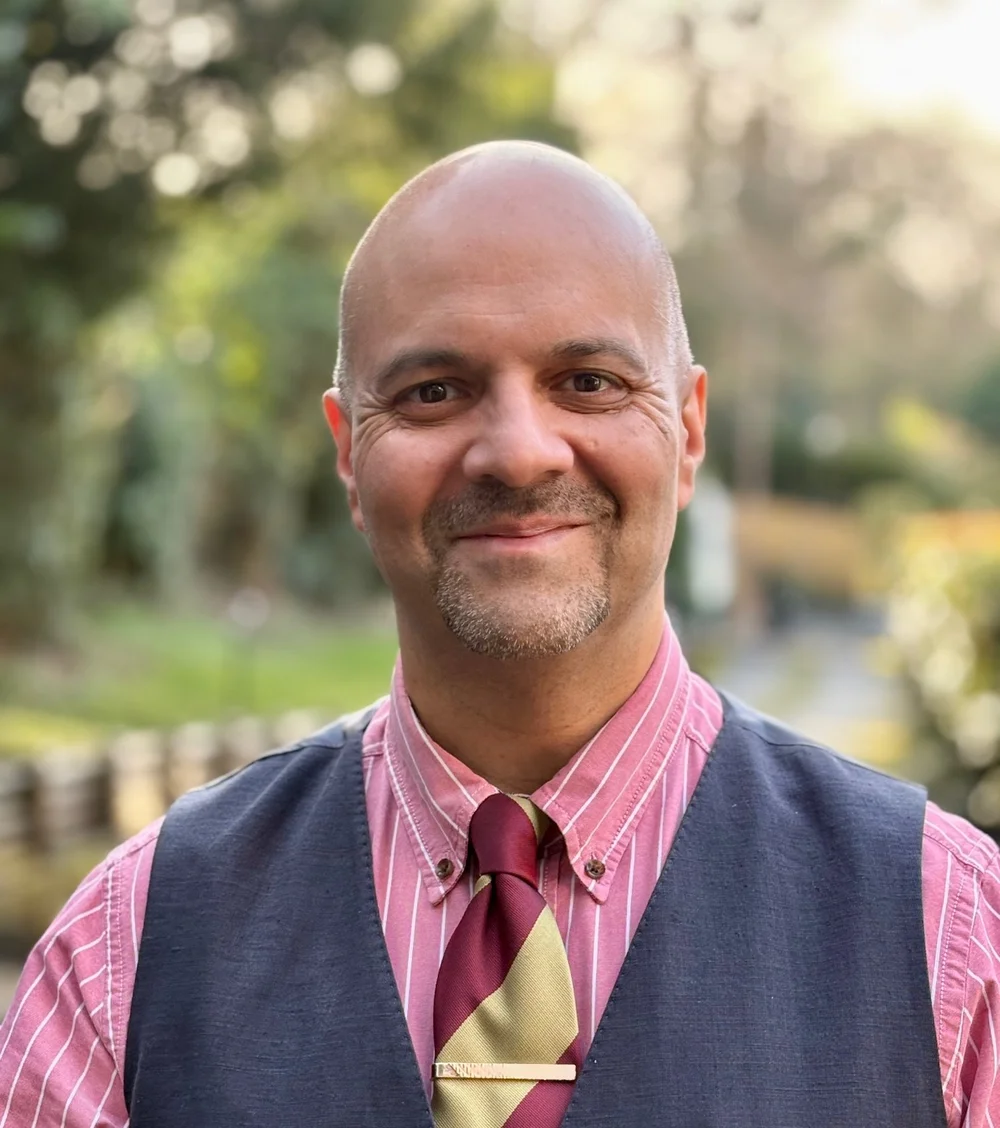
Professor Rajesh Varma, PhD · Director, MD Acumen Ltd
GP Partner & GP Trainer, The Colne Practice, Rickmansworth
Convenor for GP Trainers, West Hertfordshire
Vice Chair, RCGP Bedfordshire & Hertfordshire Faculty
Professor, New Vision University, Georgia · Professor, East-West University, Georgia
NICE Guideline Committee Member (Osteoporosis) · Visiting Researcher, University of Cambridge
Clinical practice. NHS GP Partner and GP Trainer at The Colne Practice, Rickmansworth, Hertfordshire, with over twenty years of UK primary-care practice. Extended-scope expertise across the diabetes-cardiorenal-metabolic, menopause-andropause and clinical-headache domains, with osteoporosis and metabolic bone health as a parallel focus. Dual CCT specialist in Obstetrics & Gynaecology and in Primary Care (GMC 4196453).
Academic appointments. Professor of Cardiovascular–Renal–Metabolic (CVRM) Medicine and Women’s Health at New Vision University, Tbilisi; Professor at East-West University, Georgia; Visiting Researcher, Department of Public Health & Primary Care, University of Cambridge. Curriculum author for the two Certificates of Advanced Studies — Cardio-Renal-Metabolic Medicine and Heart Failure, and Menopause and Andropause. He signs every page revision before it is published.
Professional leadership. Convenor for GP Trainers, West Hertfordshire, and Vice Chair of the Royal College of General Practitioners’ Bedfordshire & Hertfordshire Faculty.
Guideline-development role. Member of the NICE Osteoporosis Guideline Development Committee — sitting at the table where pivotal guidelines are written, while the credentialled curriculum he authors is aligned to those same guidelines.
For students and graduates. Convenes the observership’s Hertfordshire seminar programme in person, scopes and mentors student audit projects — several to publication — and leads the PLAB 2 OSCE course faculty.
Doctoral research. PhD, University of Birmingham (2009) — An investigation of basic science and clinical research methodologies to benefit clinical practice.
Credentials. MRCGP. GMC registration 4196453. Dual CCT in Obstetrics & Gynaecology and Primary Care. PhD (Birmingham, 2009). ORCID 0000-0003-4672-4461 · LinkedIn.
Research interests. Medical-education methodology, assessment validity, and the standards that keep a credential rigorous and trustworthy; the cardiovascular-renal-metabolic continuum and its translation into primary-care decision-support; the timing-of-initiation hypothesis in menopause hormone therapy; the CGRP-era pharmacology of migraine prevention; and osteoporosis risk-stratification in the perimenopausal and andropausal patient. Full list at Research & publications.
Profile links
Professor Tham Nimal-Raj — co-founder of the concept and adviser

Professor Tham Nimal-Raj
Co-founder of the concept and adviser · Chancellor, New Vision University (UK Campus) · Founder & Chair, Essex Medical Society · Senior Partner, Sai Medical Practice · Professor of Family Medicine and Anatomy
Role at MD Acumen. Professor Nimal-Raj co-founded the concept of the school and supports and advises it. He holds no course directorship, no content role and no financial control at MD Acumen Ltd, and recuses himself from any New Vision University decision that concerns MD Acumen.
Clinical practice. A senior clinician with over four decades in the UK NHS: Senior Partner at Sai Medical Practice, and previously Chief Clinical Officer within an NHS Clinical Commissioning Group. Clinical specialism in hypertension, diabetes and community diagnostics.
Academic and professional standing. Chancellor of New Vision University (UK Campus); Professor of Family Medicine and Anatomy and author of textbooks on anatomy and ultrasound; Founder and Chair of the Essex Medical Society, a regional learned society; Fellow of the Royal Society of Health; former Council Member of the British Medical Association.
The institutions we teach with
New Vision University, Tbilisi
Awarding body for the Certificates of Advanced Studies; partner medical school for the undergraduate ECTS modules, which sit inside its elective curriculum; home of the Director’s professorial appointment.
East-West University, Tbilisi
Partner medical school for the undergraduate ECTS modules, which sit inside its elective curriculum; credit is awarded by the university to its own students.
Host GP teaching surgeries
The GP training practices in Hertfordshire and Essex that host the four-week observership. Details on the observership pages.
Further institutional agreements are in progress; for undergraduate study, the award of academic credit rests with the home medical school.
How we teach, and how we are held to account
The Acumen Standard
The Golden Triangle, the Living Curriculum and one pathway across every stage — the method behind everything we teach.
How we teachQuality & governance
Every page is reviewed, signed and dated by the Director, and reviewed again when guidance changes. Read how we assure quality & governance, and our legal & regulatory information.
Work with us
Find your stage, read our research, or talk to us about a partnership. Initial enquiries receive a personal response.
 © 2026 MD Acumen Ltd · Registered in England and Wales · Company no. 16538952 · ICO registration ZC105897